
Just for that high kitchen cabinet. The towels are on the top shelf, the soup pot you use twice a year is just out of reach. Or your child wobbling on their toes at the sink in the morning. A step stool solves that in one step — literally. But which one do you choose? There are low children's stools, wide models for adults, foldable versions, and bamboo designs that you simply leave out. We've listed what to look for, so you don't miss your goal.
Why a step stool does more than you think
A step stool is one of those things you only miss when you don't have it. That one top shelf in the kitchen, the meter cupboard, the top hook in the hallway: with an extra twenty centimeters, you'll reach it easily. And you no longer have to climb on a wobbly dining chair — that saves a lot of near-falls.
For children, the difference is even greater. Reaching the tap themselves, brushing their teeth themselves, washing their hands themselves. That gives them a sense of independence and you some peace during the morning rush. And for those who are a bit older or less steady on their feet, a wide, stable stool provides just that little bit of extra security when reaching for something higher.
What to look for when choosing?
Not every step stool is the same. Go through these five points before deciding:
- Height. For a toddler at the sink, 15 to 21 cm is comfortable. For high cabinets, aim for 22 to 33 cm. Measure how much you're short; that prevents a bad purchase.
- Material. Bamboo is strong, moisture-resistant, and beautiful to look at. Plastic is lighter and cheaper. Steel often comes in adjustable heights.
- Anti-slip and stability. Look for an anti-slip top layer AND rubber feet. On slippery bathroom tiles, this is not a luxury but a necessity.
- Foldable or fixed. If you have little space, you can slide a foldable model between cabinets after use. With a fixed spot, it can also be a stool that stays put.
- Weight capacity. Children's models often go up to about 50 kg. If you want to stand on it as an adult, consciously choose a model designed for that.
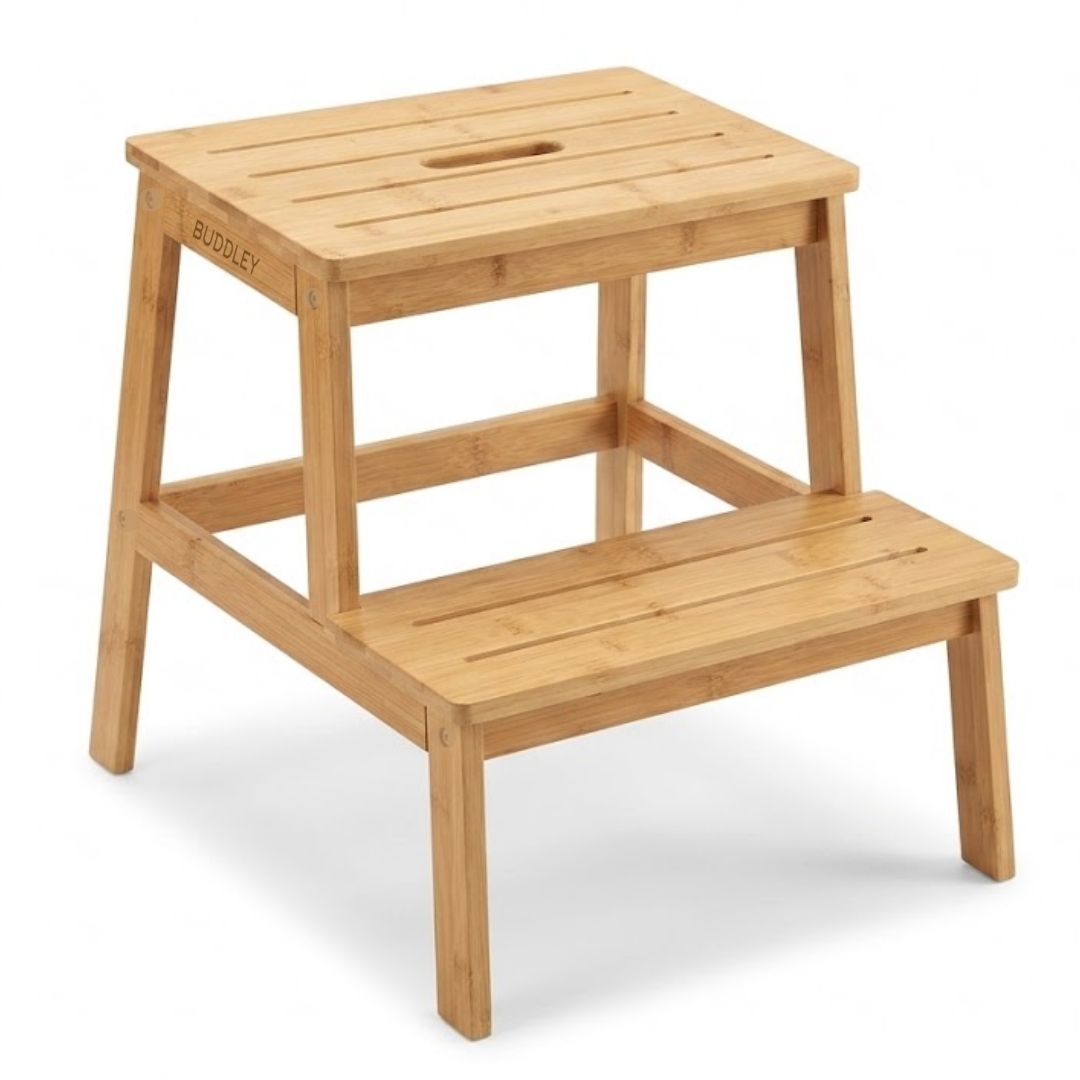
A good starting point is our bamboo step stool: 100% FSC-bamboo, an anti-slip top layer and a rubber bottom, and with the included manual, you'll be standing on it within a few minutes.
Bamboo, plastic, or foldable?
The biggest choice is in the type. Here are the three options side by side:
| Type | Strong in | What to consider | Suits |
|---|---|---|---|
| Bamboo | Appearance, sturdy, durable | Slightly pricier | Those who leave the stool visible |
| Plastic | Light, cheap, colors | Less attractive than wood | Children's room and bathroom |
| Foldable | Compact storage | Feels slightly less rock-solid | Small homes, occasional use |

If you like a natural look and the stool stays in the room, then you'll look towards bamboo step stools. The nice thing is that such a stool immediately matches the rest of our bamboo collection, from coat rack to toilet roll holder. A small disadvantage: bamboo is slightly more expensive than plastic.
For the children's room or bathroom, a plastic step stool is often more practical: light, in cheerful colors, and not afraid of a splash of water. And if you live in a small space, you can fold a 33.5 cm foldable step stool after use and slide it between two cabinets. Honestly: such a foldable model never feels quite as rock-solid as a fixed step. For daily use, it's sturdy enough.
From toddler to senior: which model fits?

For children, a low stool works best, 15 to 21 cm, with a rubber bottom so it doesn't slip away. A model with two steps, like our white-grey two-step stool, allows them to stand a bit higher and more safely at the sink. Pay attention to the weight capacity — for most children's models, it's around 50 kg.
In the kitchen, you want height. A stool of 22 to 33.5 cm brings you to the top shelf without having to stretch. If you don't use it every day, foldable is ideal.
For more security, choose a wide model with a spacious standing surface. The wider the base, the sturdier it stands. If you're actually looking for a stool for the toilet, for better posture, check out our toilet stools; that's a different type.
Want to see everything at a glance? View the complete collection of step stools » and choose by height, material, and color. 👈
How to make your step stool last
A step stool doesn't require much maintenance, but a few things help:
- Wipe it clean occasionally with a damp cloth; do not soak bamboo in water.
- Periodically check that the rubber feet and anti-slip layer are still in good condition.
- Only place it on a wet tiled floor if the feet really have good grip.
Frequently asked questions about step stools
What height step stool do I need?
That depends on who uses it. For a child at the sink, 15 to 21 cm is comfortable. If you want to reach high cabinets or the top shelf yourself, aim for 22 to 33 cm. First, measure how many centimeters you're short and choose slightly above that.
Which step stool is safe for children?
Look for an anti-slip top layer, rubber feet, and a stool that is not too high for small legs. A model with two steps provides extra stability. Also, adhere to the weight capacity, which is usually around 50 kg for children's models.
Is a bamboo step stool suitable for the bathroom?
Bamboo is naturally moisture-resistant, so a splash of water is fine. However, do not leave the stool in puddles for long periods and dry it off occasionally. If you don't want to worry at all, a plastic model is even more carefree.
How much weight can a step stool hold?
That varies by model. Children's models often go up to about 50 kg, while stools for adults carry more. If you want to stand on it yourself, consciously choose a model designed for that and check the stated maximum.
Foldable or fixed: what's better?
If you live in a small space or only use the stool occasionally, foldable is handy — you store it flat. If it has a fixed spot and you use it daily, a fixed stool is just a bit sturdier and quicker to access.
Small stool, great convenience. Find the step stool that suits you in the collection of step stools.