
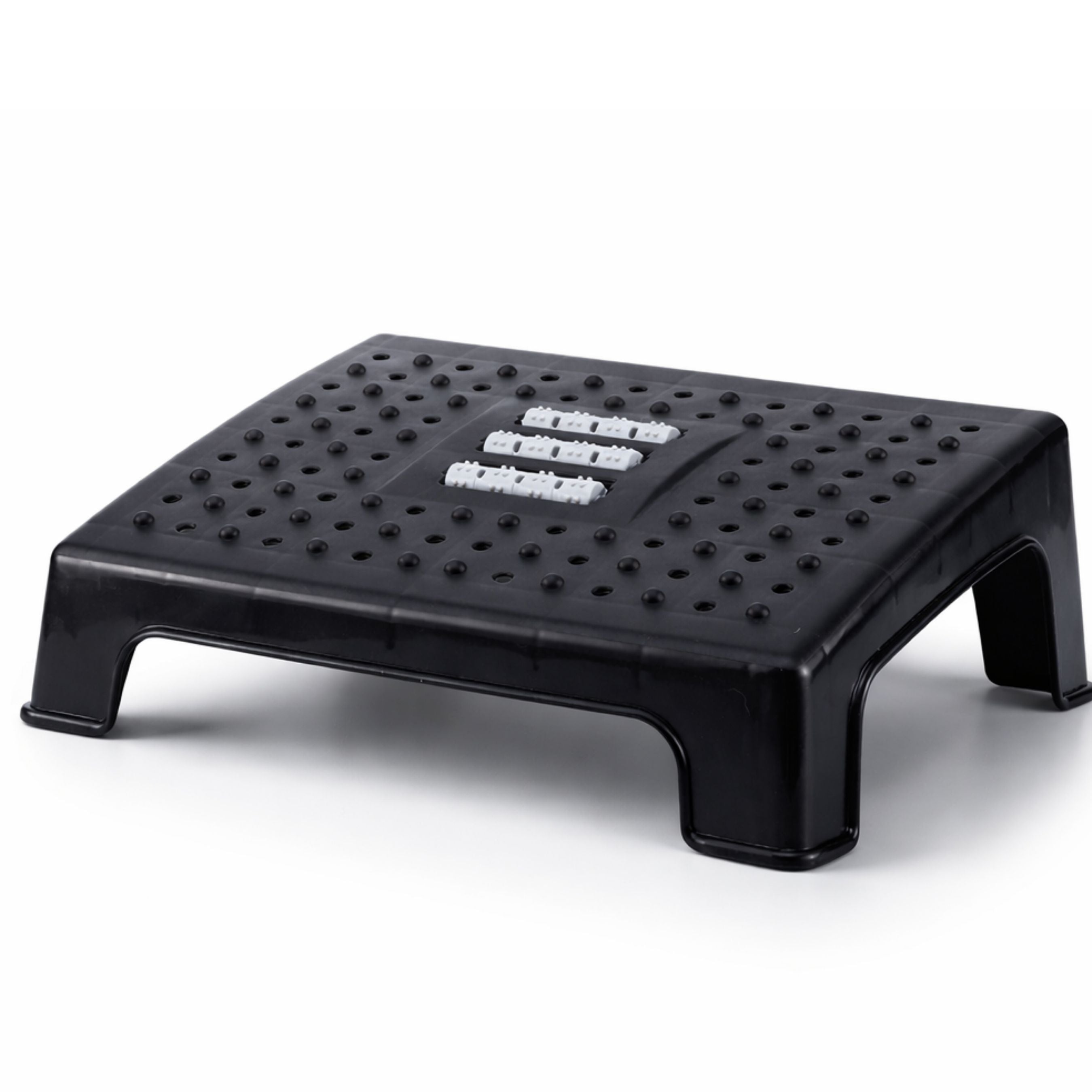
It's a quarter past four. Your feet have been dangling just off the floor for half the afternoon, you're slouching, and in the evening, you feel it in your lower back. Sound familiar? For those with an office chair that can't go any lower, that's precisely when an office footrest makes a difference. Such a small item is easy to overlook until you realize how much more relaxed you feel. We'll explain when you really need one, what to look for when choosing, and how to set it up so it genuinely helps.
Do you really need a footrest?
Not everyone needs one. The rule of thumb: can you sit with your feet flat on the floor, your knees at roughly a right angle, and your back against the backrest? Then you're all set. If you can't — because your chair can't go any lower or your desk is too high — then your feet will dangle, and your pelvis will tilt forward. You'll feel that after a few hours.
For example: if you're a bit shorter, a standard desk can quickly feel too high. You raise your chair to type comfortably, and your feet start to float. That's exactly where a footrest relieves the tension.
Honestly: a footrest won't fix a poorly adjusted chair. So first, properly adjust your chair and desk. Only if your feet still dangle after that, a footrest under your desk truly adds value.
What a good office footrest does
With your feet supported, you'll naturally stay seated at the back of your chair, back against the backrest. The pressure comes off your lower back, and your lower legs aren't compressed by the front of the seat. The beauty of it: a slight incline keeps your ankles moving, which helps maintain blood circulation during long sitting days. And when your feet are comfortably supported, you'll unconsciously fidget and shift less — maintaining your posture longer.
We are fans of a footrest that is stable and also moves with you. Our anti-slip footrest for your desk stays in place; if you want to be able to actively rock, then a tilting platform is a good choice.

What to look for when choosing?
A few things make the difference between a footrest that works and one that just gets in the way:
- Adjustable in height and angle. Adapt to your chair and your day. A fixed height is almost always too limiting.
- Anti-slip, top and bottom. Ridges on top keep your feet in place; rubber feet underneath keep the footrest still on a smooth floor.
- Large enough. You want to be able to reposition your feet without constantly slipping off.
- Sturdy. A wobbly one will naturally stop being used.
Unsure about color, or whether to choose one or two? The adjustable footrest in black is a great all-rounder to start with.

How to set up your footrest correctly
Start with your feet flat on the footrest, knees at roughly a right angle. Does it feel like your toes are pointing up or your heels are floating? Then it's too high or too steep; a few centimeters lower often helps.
Tip: vary. Set it at an angle during the day for some ankle movement, and at another time straight and slightly higher — then you use it more like a footstool. That variation is more comfortable than maintaining the exact same posture all day. Also, give it some time: the first few days, a different foot position will take some getting used to, but then you'll miss it if it's not there.
Do you work from home a lot? Then you'll get the most out of it if the rest of your workstation is also correct. Read our tips for healthy working as well.
Want to browse? Here are all our ergonomic footrests at a glance. 👍
Frequently asked questions
Do I need a footrest or not?
Calculate it simply: are your feet flat on the floor with your knees at a right angle and your back against the backrest? Then no. Are your feet dangling because your chair can't go lower? Then a footrest will help.
How high should a footrest be?
High enough so that your feet are flat and your knees form approximately a right angle. If your toes point up or your heels float, it's too high or too steep — a few centimeters lower usually makes a difference.
Set it at an angle or straight?
Both are useful, at different times. An angle keeps your ankles moving; straight and a bit higher works nicely as a footstool. With an adjustable model, you can switch.
Does a footrest replace a good office chair?
No. First, adjust your chair and desk properly. A footrest is the supplement if your feet still aren't flat afterward, not the solution for a poorly adjusted workstation.
Who is a footrest especially good for?
For those who are a bit shorter, have a desk that isn't height-adjustable, or sit for long days. It also helps with a sit-stand desk that doesn't go low enough.
Small aid, big difference at the end of your workday — provided you set it up correctly. View the entire collection of footrests and choose one that fits your chair and desk.