
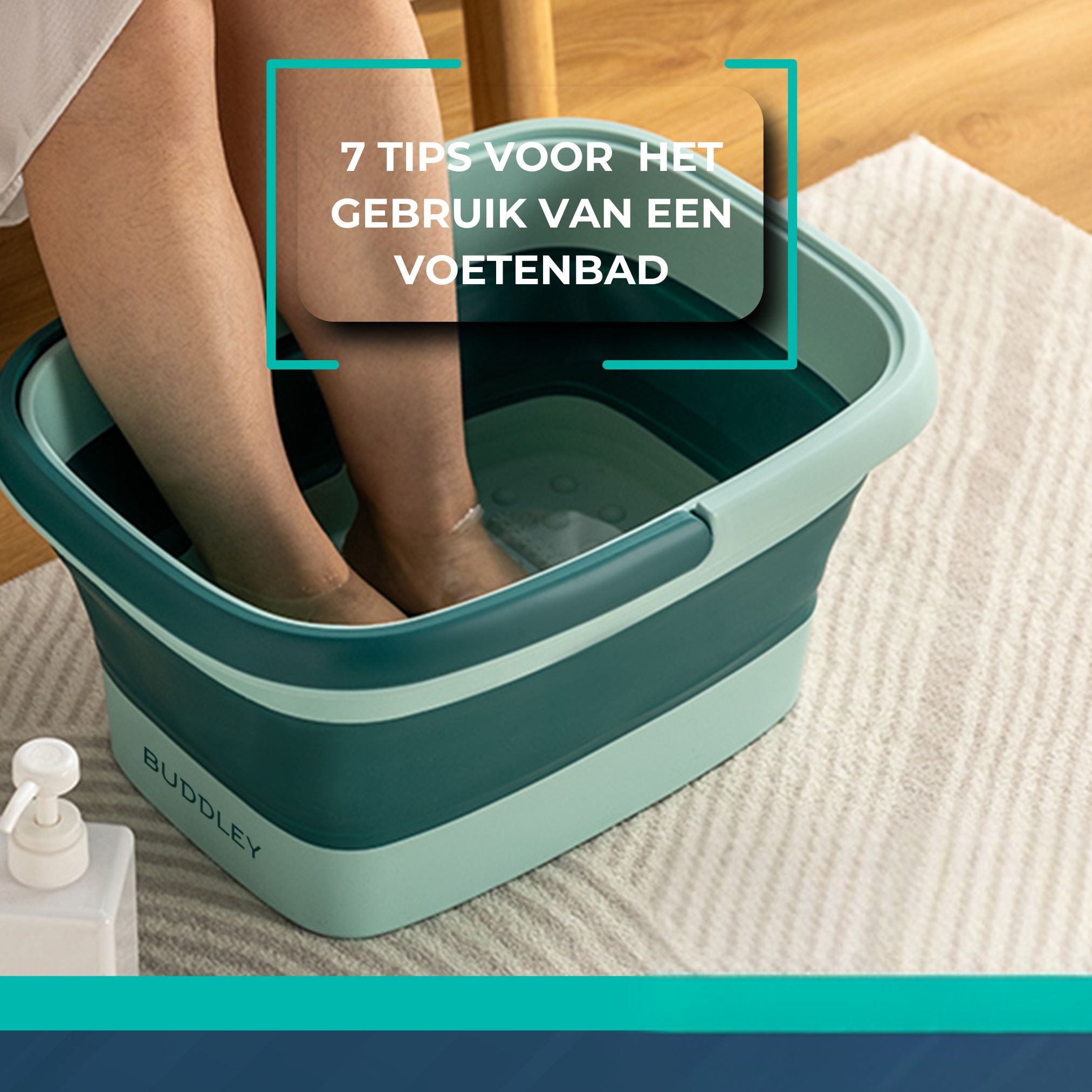
After a long day, you finally stop moving and notice that your feet were actually done for the day a while ago. You know that feeling — a kind of heavy, tingling sensation you only notice once you finally stand still. A foot bath helps with that more than you might think. Not as a wellness cliche, but simply as something practical you can do tonight.
We'll tell you how, what you need for it, and which type of foot bath suits you best.
When is a foot bath actually useful?
Not just after a day in high heels or a long walk. Tired feet also come from sitting at your desk for a long time — your circulation works less well when you sit still for extended periods, and your feet notice that first. Many people who work behind a screen all day say they experience heavy or swollen ankles by the end of the day.
A warm foot bath can stimulate blood flow and reduce that feeling of heaviness. These aren't medical claims — but you simply notice the effect.
Small downside: you need a few minutes to fetch water, and if you have a foldable model, you have to set it up first. That sounds like a small thing, but it's exactly the barrier that stops people. We'll come back to that shortly.
What do you need?
Not much, really:
- A foot bath — foldable or extra deep (see below)
- Warm water, between 37 and 42°C
- Optional: sea salt, bath salt, or a few drops of lavender oil
- A dry towel
That's it. No special equipment, no timer app.
A foot bath in 15 minutes — here's how

- Fill the tub with warm water — 37–42°C is comfortable for most people. Boiling hot has the opposite effect: temperatures that are too high can irritate the skin.
- Add something if you like — more on that in the next section.
- Put your feet in and let them rest — at least 10 minutes, 15 to 20 is better. Grab a book, put something on. It doesn't need to be more than that.
- Dry your feet thoroughly — including between the toes, or you'll get fungal issues. Seriously.
- Moisturize if you want — foot cream or regular body lotion. Your skin has just absorbed the moisture nicely at this point.
Five steps, a quarter of an hour. You don't need to turn it into a full spa evening.
What do you add to the water?
There's a lot of noise online about this. What actually works?
Sea salt or bath salt — draws out a bit of moisture, which gives a soothing feeling with swollen feet. Don't use too much: one tablespoon per liter is enough. More doesn't make the water more effective, just stickier.
Lavender or peppermint oil — purely aromatherapeutic. You smell it, and that helps you relax. Whether you feel anything on your feet themselves is less certain. But if it smells nice, you'll sleep better afterward. A few drops are enough.
Epsom salt (magnesium sulfate) — popular among athletes. There are indications that magnesium is absorbed through the skin, although the evidence for this is limited. It does give a more pleasant feeling than plain water. We think it's worth trying.
What we don't recommend: bubble bath or shampoo. These irritate the skin with prolonged exposure and make the tub slippery — not handy when you're putting your feet in it.
Foldable or extra deep: which suits you?

This is a real choice, and it depends on how you're going to use it.
Foldable foot bath — compact, easy to store in a cupboard or under the bed. Ideal if you don't have space for it every day or if you also want to take it traveling. The model folds flat and fits in an average bag. Downside: a shallower water depth, so your ankles aren't fully submerged.
Extra deep foot bath — both your feet and your ankles can be fully submerged. That makes a difference if you suffer from swollen ankles or have really been on your feet a long time. It does take up more space.
People who use it regularly tend to choose an extra deep model more often. The foldable version is the best choice if you're unsure whether you have the space for it — and if you also want to take it with you when staying somewhere else.

If you also sit a lot during the day and suffer from heavy legs, a footrest for your desk combined with an evening foot bath can really make a difference. That combination keeps your circulation going a bit better throughout the day.
Frequently asked questions about the foot bath
How warm should the water in a foot bath be?
Between 37 and 42°C works well for most people. Too hot (above 43°C) can irritate the skin. For people with diabetes or reduced sensation in the feet, caution is advised — keep the temperature lower (max 37°C) and use a thermometer.
How long should you keep your feet in a foot bath?
At least 10 minutes, but 15 to 20 is better. Shorter has little effect; longer doesn't add much but doesn't cause harm either.
How often is a foot bath good to do?
Daily is fine, but two to three times a week is enough for most people. Your skin also needs some rest now and then.
Can I use a foot bath if I have diabetes?
Caution is warranted here — people with diabetes often have reduced sensation in their feet and are less likely to notice water that's too hot. Use a thermometer, keep the temperature at a maximum of 37°C, and consult your doctor if in doubt.
What's the difference between a foot bath and a foot bath?
Same product, just different Dutch names ("voetenbad" and "voetbadje") that both translate to "foot bath" in English. The way they work is identical.
All foot baths from Buddley
Want to see which models we have — from compact foldable to extra deep for feet and ankles? 🛁️
View all foot baths →